


What exactly is a peacemaker? Does it mean you’re a pushover? Does it mean you never have an opinion? Or is there something deeper, something more “active” about being a “maker” of peace?
In the increasingly toxic world we’re living in right now, the call to stand for peace feels stronger than ever. It’s heavy out there. Everywhere you look, there’s a conflict brewing. Whether it’s a heated battle of opinions on your feed, an increase in “I don’t care” apathy, or the slow burn of misunderstandings from unresolved issues, it can feel like our joy is being sucked out through a straw.
It’s easy to feel like the world is just “too far gone,” but here’s the truth: if we choose to establish peace in our own small circles, a more peaceful world actually becomes possible.
But how do we move from just wanting peace to actually making it? And what misconceptions are holding us back from trying? Let’s dive into what it really looks like to be a peacemaker in a messy world.
What Is A Peacemaker: Following The Example of Jesus Christ
There’s a common misconception that being a peacemaker means being a “human doormat”—that Jesus was just this docile, soft-spoken figure who never ruffled any feathers. We imagine a peacemaker as someone who just smiles, stays quiet, and avoids conflict at all costs.
But if you look at the life of Jesus Christ, he was anything but passive. In fact, he was a disruptor. He spent His ministry challenging toxic traditions, calling out hypocrisy, and flipping tables when the situation demanded it.
Peace is a Verb, Not a Feeling
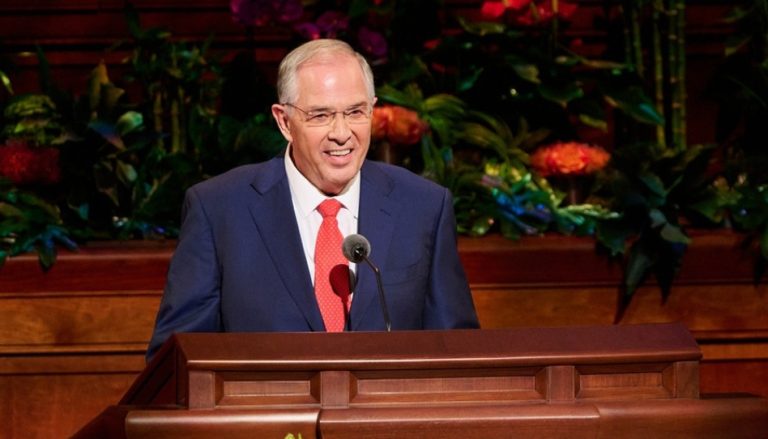
In the original Greek, the word used in the Beatitudes is eirēnopoios. It doesn’t mean “peace-lover” or “peace-wisher.” It literally means peace-maker. As President Russell M. Nelson has taught, “Peacemaking is a choice… a maker is someone who uses effort and intention to create, to build.”
Jesus didn’t just “feel” peaceful; He made peace by addressing the things that were destroying it.
1. He Challenged Traditions That Hurt People
The religious leaders of Jesus’ day had turned the law into a heavy burden. They cared more about the “rules” than the people the rules were meant to help. Jesus actively disrupted this. He healed on the Sabbath, he ate with “sinners,” and he spoke to people society told him to ignore.
He knew that you can’t have true peace where there is exclusion or spiritual bullying. By breaking those traditions, He was making a higher level of peace possible—one based on love rather than legalism.
2. He Called Out Hypocrisy (Even When It Was Uncomfortable)
Sometimes, the most “peaceful” thing you can do is speak the truth. Jesus wasn’t afraid to call out the Pharisees, famously calling them “whited sepulchres.” He wasn’t being mean; He was being a peacemaker.
Why? Because hypocrisy and spiritual manipulation are the enemies of peace. You can’t have a peaceful community built on lies. By calling out the truth, He was clearing the ground so that real, honest relationships could grow.
3. He Showed Us That Peace Requires Action
Think about the story of the woman taken in adultery. The “peaceful” thing according to the status quo would have been to let the law take its course. Instead, Jesus stepped into the middle of a violent, high-tension moment. He challenged the accusers to look at their own hearts.
He didn’t just “hope” for a peaceful outcome; He took the initiative to change the dynamic of the entire room. That is the essence of a peacemaker—someone who is “up and doing,” as LDS scholars often note, taking the initiative to reconcile people to God and to each other.
What Is A Peacemaker: Stories From The Scriptures
If you look through the Old and New Testaments, you’ll find that the definition of a peacemaker isn’t just one thing. It’s a beautiful, varied mosaic. Depending on the story, a peacemaker might be a mediator, a protector, or a humble servant. But while the “how” changes, the “who” remains the same: every scriptural example of peace points directly back to Jesus Christ.
Scriptural Heroes of Peace
Think about Abigail in the Old Testament. When her husband, Nabal, insulted David and put their entire household at risk of a violent attack, she didn’t just sit home and pray for a peaceful feeling. She acted. She gathered supplies, rode out to meet an angry army, and spoke with such wisdom and humility that she stopped a massacre before it started. She was a “maker” of peace through proactive, brave mediation.
Then look at Captain Moroni in the Book of Mormon. We often think of him in the context of war, but his entire motivation was peace. He didn’t fight for the sake of power; he fought to protect the “peace of their families” and their right to worship. His example shows us that sometimes, making peace means setting firm boundaries and defending what is sacred.
Ultimately, all these paths lead to the Prince of Peace. Whether it was Christ stilling the storm on the Sea of Galilee or His ultimate act of peacemaking—the Atonement—which reconciled us to God, He showed us that peace is the result of intentional, divine work.
What Peacemaking Is Not
It’s easy to fall into the trap of judging others’ “peacemaker status” based on their personality.
We often look at someone who is soft-spoken and call them a peacemaker, while labeling someone who is outspoken or firm as “contentious.” But let’s clear the air: peacemaking is not the same as passive silence.
Peacemaking is not “Peace at any Price”
Sometimes, we think being a peacemaker means we should never speak up when something is wrong. We tell ourselves, “I’ll just stay quiet to keep the peace.” But if that “peace” is built on a foundation of unfairness, dishonesty, or harm, it isn’t actually peace—it’s just a temporary lack of noise.
True peacemaking requires us to speak out against things that destroy the Spirit. If someone is being bullied, if a tradition is harmful, or if the truth is being twisted, a real peacemaker doesn’t stay silent. They speak up—not to start a fight, but to restore a foundation where true peace can actually exist.
Peacemaking is not Avoidance
Avoiding a hard conversation isn’t peacemaking; it’s just procrastination. Avoiding conflict often leads to “fake peace,” where resentment simmers under the surface. A peacemaker has the courage to address the “elephant in the room” with charity.
“Blessed are the peacemakers,” doesn’t mean “Blessed are those who never say anything uncomfortable.”
It means blessed are those who are brave enough to disrupt a toxic situation so that a healthy, Christ-centered peace can take its place. Being outspoken doesn’t disqualify you from being a peacemaker—as long as your voice is being used to build up, to protect, and to point people back to the truth.
Remember, you don’t have to be perfect to start. You don’t even have to be fearless. You just have to be willing to trade your silence for service and your “peace at any price” for the true, lasting peace of Jesus Christ.
The world doesn’t need more people who just love the idea of peace. It needs makers. It needs people like Abigail, like Moroni, and like you—ready to speak up, ready to disrupt the toxic, and ready to labor with the Prince of Peace in the “staggering task” of healing a broken world.So, the next time you feel that nudge to speak out for someone being sidelined, or the courage to finally have that “elephant in the room” conversation—take it. You aren’t just ruffling feathers; you’re clearing a path for the Spirit to return. And that is exactly what a peacemaker does.