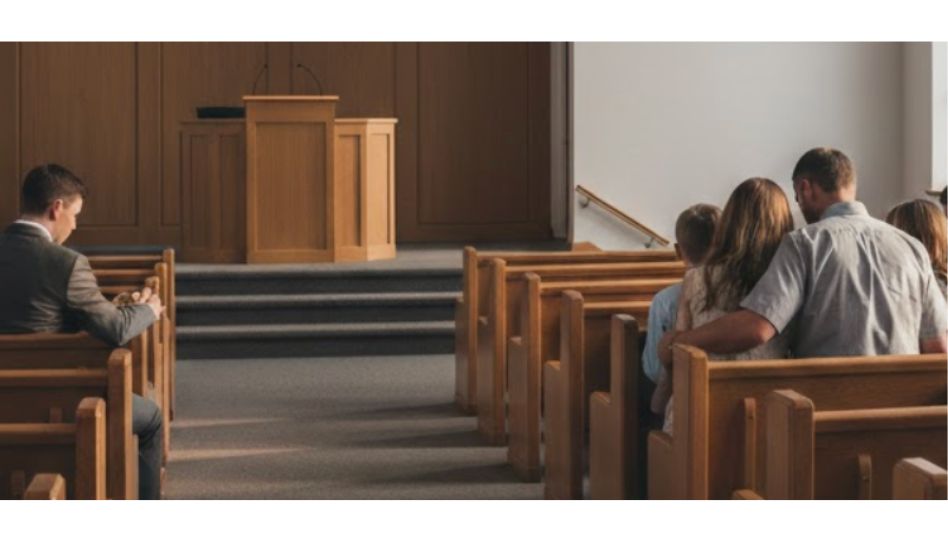
When Sarah stepped through the doors of the chapel for the first time, she felt a rush of anticipation. At 18, she had spent weeks meeting with the missionaries, drawn in by a message that felt like coming home. Her questions were answered, and she was ready to learn more.
But as she entered the foyer, a sudden wave of uncertainty enveloped her.
She looked at the rows of pews, each one filled with parents, children, and grandparents sitting together. “Is there a seating assignment here?” she wondered. “Everyone seems to be with their family. Where do I fit in?”
While the atmosphere was peaceful and the Spirit was undeniable, Sarah felt a sharp contrast in her own heart. She had come because she loved the gospel, yet looking around, she felt like a guest at a family reunion she wasn’t quite part of yet.
“The first time I went, I was so excited and curious,” Sarah recalls. “But as I sat there, I felt this strange mix of peace and confusion. It seemed like a church designed for families, and I was there all by myself. I remember thinking, ‘Do I really belong here?’“
Families Are Central To The Church, Which Can Feel Lonely for Those Alone
The Church of Jesus Christ of Latter-day Saints places a beautiful emphasis on the family. We believe that family is central to God’s plan and that these bonds are meant to last beyond this life. It is a message of hope, but for those who walk into the chapel without a spouse, parent, or sibling by their side, that same message can sometimes feel like a quiet reminder of what they are missing.
While every person is welcomed with open arms, there is a unique type of loneliness that comes with being the only one in your family to embrace the gospel.
Ryan (not his real name) remembers sitting through a testimony meeting where the theme of eternal families took center stage. “It always warms my heart to hear people share their witness that families can be together forever,” he says. “I believe it with all my heart. But in the quiet moments, I’m often left wondering, ‘What about me?’ It’s hard to claim that promise for yourself when you’re the only one in your home walking this path.”
For Sarah, the struggle is often found in the day-to-day rhythm of living her faith. “Being the first or only member in your family is an uphill climb,” she admits. “You come to church and see families uplifting each other, but when you go home, you might be the only one praying or reading the scriptures. Sometimes your beliefs are questioned, and most of the time, you’re your own support system. It can feel incredibly isolating.”
So, what is it that keeps them moving forward when the climb feels steep? For both Sarah and Ryan, the answer has been the “family” they found within the pews. It was the leaders who checked in when things were quiet and the members who cleared a spot on their bench, making sure no one had to sit—or journey—alone.
Church Members Can Help Ease The Loneliness: Remembering That The Church Is A Family
While the “pioneer” journey can feel solitary, the beauty of the Gospel is that we are never truly meant to walk alone.
When we step into the waters of baptism, we don’t just join a church; we are adopted into a global family. For Sarah and Ryan, this wasn’t just a nice sentiment—it became their lifeline.
Sarah’s perspective began to shift when she realized her church friends weren’t just peers; they were sisters and brothers. Local families began inviting her over for Sunday dinners and including her in their holiday traditions. “I started to see that God provides family in different ways,” she says. “The families in my ward didn’t just ‘welcome’ me; they made me feel like I truly belonged on their bench and in their lives.”
For Ryan, belonging came through the quiet, consistent support of his leaders. His Bishop became more than just a local leader—he became a father figure. “He helped me navigate the gospel and answered my hardest questions without judgment,” Ryan shares. “Having someone to look up to who truly cared about my progress made all the difference. I realized that while my biological family wasn’t at church with me, I had a spiritual fatherhood and brotherhood surrounding me.”
5 Ways To Make The Church Feel Like A Family
If there is a member in your congregation who is the only one in their family attending, you have a sacred opportunity to be their support system. Here are five ways to help them feel at home:
Look Beyond the Familiar
It is natural to gravitate toward our own families or long-time friends, but a simple “Hello” can change someone’s entire day. Make it a point to greet those sitting alone. You never know who is waiting for a sign that they are seen.
Broaden the Circle of Inclusion
Inclusion is more than an invitation; it’s an intentional effort. If you’re planning a casual get-together or a study group, think of the “pioneers” in your ward. A simple text saying, “We’d love to have you join us,” can bridge the gap between being a guest and being a friend.
Be Mindful of Different Realities
During lessons about family or traditions, be aware that some in the room may be struggling to apply those principles in a divided home. Use language that validates all life situations, ensuring everyone feels the Savior’s promises apply to them, too.
Find Common Ground in Christ
We may come from different backgrounds, but we all share a love for the Savior. Focus on the core truths of the Gospel. When we talk about our shared faith, we realize that our commonalities are much stronger than our different family dynamics.
Simply Be There
You don’t need a complex plan or “heavy” words to make an impact. Sometimes, fellowship is just sitting next to someone in the chapel so they don’t have to look at an empty seat. Reliability and presence are the greatest gifts you can offer.
Conclusion
Being the “only one” is an act of incredible courage. It is a testament to a person’s love for the Lord that they continue to show up, even when their pews are empty of kin. But in the Kingdom of God, no one is an island.
By opening our hearts and our homes, we fulfill the true purpose of the Church: to be a place where everyone—regardless of their family’s status—can say with confidence, “I belong here.” To those walking this path alone: your feelings are valid, your courage is seen, and you are so very loved.
If you or someone you know are struggling with feelings of belongingness in the Church, talk to us.